But rather through play, listening, everyday life, and familiarity?
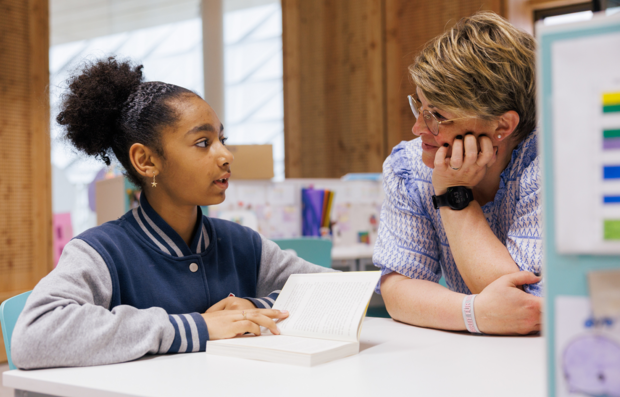
At our Phorms schools and daycare centers, we focus on immersion right from the start. Here, children are immersed in a new language from an early age. They hear it during morning circle time, at mealtimes, while doing crafts, on the playground, and in their interactions with their teachers, educators, and children from all over the world.
This is especially valuable at a young age. Children approach new languages with remarkable openness. They pick up sounds, melodies, words, and structures almost effortlessly and link them directly to situations, relationships, and experiences.
This creates an approach that feels natural. They experience language firsthand and, step by step, develop understanding, confidence, and the ability to express themselves.
The international environment at Phorms also plays a key role in this process. When children play, learn, laugh, discuss, and experience everyday life together with peers from different countries, they encounter multilingualism as a completely natural part of life. Language then becomes a living force that brings people together.
And this is precisely where the great strength of immersive learning environments lies, because children develop an early sense of how to switch between languages and navigate confidently within more than one linguistic system. This flexible way of thinking can also have a positive impact on learning as a whole, as it strengthens attention, adaptability, and cognitive flexibility.
For us, immersion is therefore a natural and everyday way of learning—one that opens doors for children early on without overwhelming them, and one that shows just how much becomes possible when language is not merely taught, but truly experienced and lived.