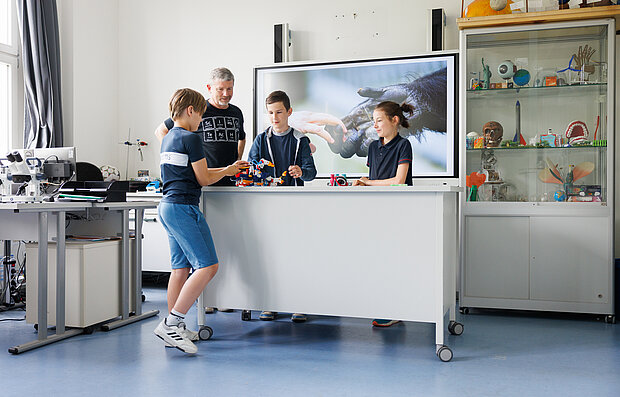
What does a refrigerator have to do with German class?
For fourth-grade students at the Phorms Frankfurt City Campus, it can serve as the starting point for their own project. During the so-called “Night at the Museum,” following a visit to the Museum of Communication, students select an invention and then investigate how it has changed over the past 100 years.
Information is transformed into research, timelines, and informational texts. In the process, various subjects - such as German and English, math, STEM, as well as digital education and media literacy - intertwine. The combination of an in-person museum experience, collaborative research, and creative presentation allows students to experience learning as a cohesive process.
In project-based work, teachers provide guidance, ask questions, connect different subject areas, and offer direction where needed. At the same time, students can contribute their own ideas, try out different approaches, and increasingly decide for themselves how to reach a conclusion.
The project culminates in the actual “Night at the Museum.” The school becomes an exhibition space, and the children present their findings to their families, teachers, and classmates. In doing so, they demonstrate what they have learned academically, explain connections, answer questions, and showcase how they worked as a team and overcame challenges.
Such projects open up opportunities even at the elementary school level for students to make their own decisions and take responsibility for their share of the collective outcome.
Research also provides encouraging evidence: Studies involving second- and third-grade classes have shown that structured project-based learning can support subject-specific learning and the reading of non-fiction texts.
At Phorms, carefully selected projects and project weeks create space for this exploration. In higher grades, there are further opportunities for independent research, such as at the Frankfurt Science Center or the Coding Lab at the Phorms Campus Hamburg.