Two Languages, Double the Effort?
Why bilingual learning often happens more naturally than many people think
Isn’t bilingual learning too much work?
At first glance, learning two languages in preschool and school sounds like constant translation and double the work.
But children acquire language differently.
With immersive learning, they’re directly immersed in the target language. They don’t constantly translate back and forth, but rather understand content within the appropriate context.
1. Children acquire language quite naturally in everyday life
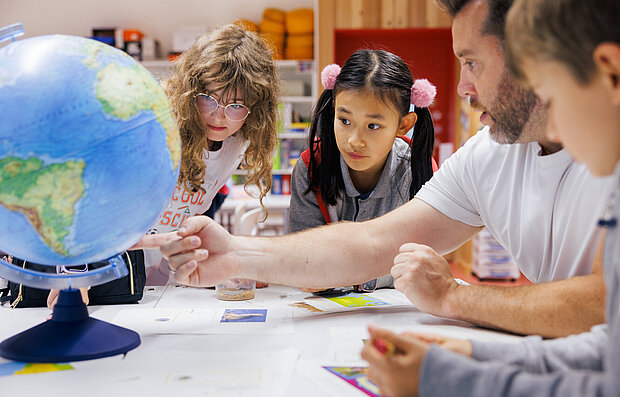
They do math, explore, play, and discover in both English and German.
The focus is on the content, and language naturally becomes a tool in the process.
- Understanding begins before they speak their first sentence
Children observe, listen, and recognize patterns. Research also shows that they learn through observation, nonverbal communication, and active participation long before they speak the new language themselves.
Facial expressions, gestures, pictures, and actions help them do this.
3. Familiar routines provide a sense of security
Greetings, rituals, and recurring situations provide a sense of orientation.
Preschoolers and schoolchildren encounter words and sentence structures time and again in a context they can understand.
Whether in preschool or later in school, children gradually grow into the second language.
With reliable support and at their own pace, the second language becomes a natural part of their play, learning, and interactions.