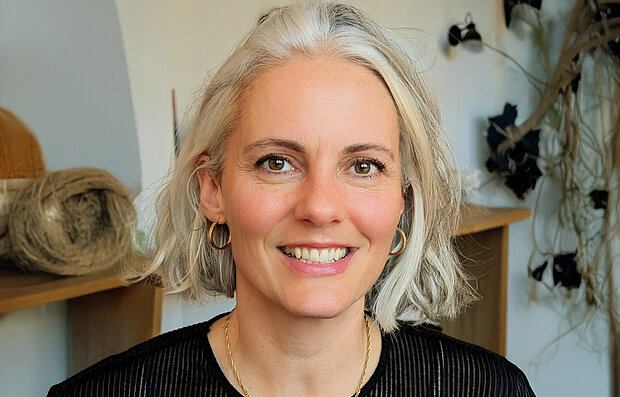
What happens when you take the leap across the Atlantic at the age of 25 to become part of a school project that is still in its infancy? For Susanne Wengenmeier, it was the start of a special journey - characterized by a pioneering spirit, commitment and the vision of rethinking school. In this interview, she looks back on two decades as a teacher at Phorms.
When did you join Phorms?
I started in 2006. Back then, there was still a real start-up mentality at Phorms. I was 25 years old, fresh out of university and looking for a job as a teacher at an international school. When I was accepted, I moved from Canada to Berlin without further ado. Originally, I wanted to stay for a year - now it's almost 20.
So you've literally "grown up" with Phorms ...
You could say that. We started small: with around 12 colleagues and 42 children. There were no floors or chairs in the building, no pictures on the walls, no photocopier - nothing. I first went to the library and got some books. That was quite an adventure. Everybody pitched in, including the parents. The spirit was: we're building something great here! Everyone was enthusiastic about the concept. We wanted to rethink school.
What would you say: did you succeed?
Absolutely. We have never lost sight of our original vision, even though we have grown enormously since then: Our focus is not just on the curriculum, but on the whole child. We take a holistic approach to education. Empathy, compassion and open communication are at least as important as grades. Social interaction is important to us. This starts with small classes in which we can respond to each child individually. Our teachers are incredibly committed. We care!
Have you always wanted to work with children?
I love children. Especially young people between the ages of 10 and 15. This phase is incredibly exciting. On the one hand, the students are still so childlike - sometimes we read picture books and everyone listens spellbound. On the other hand, they're already little adults talking about parties.
What does good education mean to you personally?
For me, good education means above all awakening a passion for learning - that children are curious, want to know more and ask questions. Education is more than just the curriculum; it also encompasses the social, the togetherness. Empathy and compassion are what really count at the end of the day.
Apart from that, are there any core values that you would like to pass on to the students?
Especially in our increasingly digitalised world, I think it's important that we have as much personal contact as possible and exchange ideas face-to-face. Politeness and respect are key for me. We have a saying in my class: Being kind is better than being right. Whenever there's a problem or an argument, the children remember this. You often want to be right. But in the end, it's much more important to be kind and compassionate.
Is there a moment in your career as a teacher that you particularly like to remember?
There is not one special moment, but rather many small ones. Children often remember certain experiences years later when they graduate from high school. For example, they say: "That was the first time I enjoyed maths." I'm always amazed at how big an influence we have on young people. I'm really happy about that. In moments like that, I realize how meaningful my job is.
What else motivates you to give your best every day?
I have a great team where we support each other. When I started out myself, I took my lead from experienced teachers - now younger people take their lead from me. It's nice to be able to pass on my experience.
What do you wish for the future of your school and the children?
The school system urgently needs major changes. Many things are still far too old-fashioned and rigid. Reforms are needed. My wish for the children is that they go their own way, equipped with everything that is important to us at Phorms: Curiosity, self-confidence, empathy and the ability to think critically. They should learn to accept challenges with courage, take responsibility and treat each other with respect.
Thank you for talking to us, Susanne!